
Shining Science @ShiningScience
Sky above, science within — your guide to the universe. shiningscience.com In the Realm of Bright Ideas Joined June 2022-
Tweets7K
-
Followers143K
-
Following22K
-
Likes3K
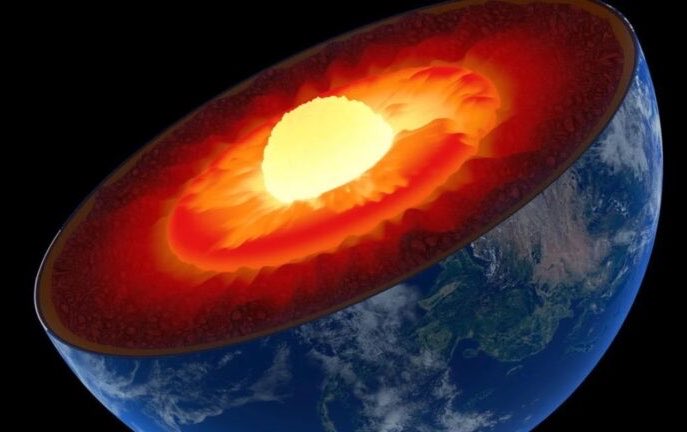
🚨: Earth's Core Is Leaking All Sorts of Materials That Have Been Trapped Since Our Planet's Birth

COVID-19 and Flu May Awaken ‘Sleeping’ Cancer Cells Hiding in the Lungs for Years A study published in Nature has uncovered a disturbing possibility: common respiratory infections, including COVID-19 and influenza, may awaken dormant breast cancer cells hiding in the lungs, allowing them to begin growing again. When breast cancer spreads, some cancer cells can travel to distant organs, including the lungs. Even after successful treatment of the original tumor, a few of these cells may remain alive but inactive for years. They can stay hidden without causing symptoms, making it seem as though the cancer is gone. But researchers have discovered that a severe respiratory infection may change that situation. When the body fights a virus, it releases inflammatory signals to defend itself. One of these signals, a protein called interleukin-6 (IL-6), appears to play a key role in waking up dormant cancer cells. Once activated, these previously silent cells can multiply and begin forming new tumors. The most unsettling part? The researchers also examined human health data and found that breast cancer survivors who contracted COVID-19 had a higher risk of developing lung metastases. This supports the laboratory findings, although it does not prove that infection alone caused the cancer to return. Scientists are now investigating whether blocking IL-6 or controlling the harmful effects of inflammation could help prevent these hidden cancer cells from becoming active again. This does NOT mean that catching the flu or COVID-19 will inevitably cause cancer to return. More research is needed to understand the risks and determine whether treatments targeting inflammation can protect cancer survivors. Still, the discovery raises a fascinating and important question: Could cancer sometimes return not because new cancer cells appear, but because cells that survived treatment have been waiting for the right signal to wake up? Source: DeGregori, J., Aguirre-Ghiso, J. A., Rincon, M., & Vermeulen, R. (2025). Respiratory viral infections awaken metastatic breast cancer cells in lungs. Nature.

Elon Musk Says He Experienced AI Psychosis 6 Times — Now Silicon Valley Is Making It a Trend In Silicon Valley, a strange new trend is raising questions about how far the tech world is willing to go in its obsession with artificial intelligence. Elon Musk recently revealed that he had experienced around six episodes of what he called “AI psychosis” or “cyber psychosis” over the past year. The phrase is not an official medical diagnosis, but it is increasingly being used to describe disturbing psychological experiences linked to intense interactions with AI. What makes this trend even more surprising is how some technology leaders are talking about it. Instead of treating the term as a warning, some influential figures are turning it into a joke, a badge of honor, or even a sign that they are pushing the limits of technology further than everyone else. The concern is that extreme mental strain and confusion are being presented as the price of staying ahead in the AI race. When losing sleep, feeling overwhelmed, or struggling to separate AI-generated ideas from reality becomes a symbol of dedication, the line between ambition and unhealthy obsession can become dangerously blurred. AI can help people think, create, and solve problems in extraordinary ways. But intense experiences involving AI should not automatically be treated as proof of intelligence, innovation, or success. When technology begins to affect how we understand reality, should that be celebrated as progress or treated as a warning sign? Source: Business Insider (2026), Elon Musk Says He’s Had AI Psychosis Half a Dozen Times in the Last Year.

A Cheap Worm Medicine May Hold a Surprising Clue to Drug-Resistant Lung Cancer Scientists are investigating an unexpected possibility involving mebendazole, an inexpensive drug commonly used to kill parasitic worms. In a study published in PLOS ONE, researchers explored whether it could help weaken lung cancer cells that had stopped responding to existing treatment. The study focused on a type of non-small cell lung cancer linked to mutations in the EGFR gene. Doctors use targeted medicines such as gefitinib to block the signals that drive cancer growth. But cancer cells can eventually find ways around these drugs, allowing tumors to keep growing. In laboratory experiments, gefitinib alone left about 93% of cancer cells viable after 72 hours. When researchers combined it with mebendazole, that figure dropped to just 38% at the tested concentrations. The team also tested the combination in mice carrying drug-resistant human lung cancer tumors. Without treatment, the tumors doubled in a median of just 6.2 days. Gefitinib alone extended that time to 15.5 days, while the combination pushed it to approximately 25 days. How could a worm medicine make such a difference? Mebendazole disrupts tiny structures called microtubules, which cells need to divide. Researchers suspect this different mechanism may make cancer cells more vulnerable, even when they have developed resistance to other drugs. But the treatment did not eliminate the tumors, and these results came from laboratory cells and mice, not human patients. Further research is needed to determine whether the combination is safe and effective in people. For now, mebendazole is not an approved treatment for lung cancer, and patients should not take it for cancer without specialist medical guidance. Could an old, inexpensive medicine eventually help overcome one of cancer treatment’s biggest obstacles? Scientists have uncovered a promising lead, but the real answer will depend on what future human studies reveal. Source: PLOS ONE (2026); ScienceAlert

THE SURPRISING SCIENCE OF TOUCH: CAN A SIMPLE GESTURE REDUCE STRESS IN A RELATIONSHIP? Could a small, affectionate gesture between partners have a deeper effect than most people realize? Research suggests that loving physical touch, including hugs, gentle caresses, and playful touches, may help reduce stress and strengthen emotional bonds. Scientists have found that affectionate touch can help people feel safer, calmer, and more connected to their partners. A 2019 study published in Psychological Science found that touch between romantic partners helped reduce stress during difficult conversations and improved how couples handled conflict. Source: Jakubiak & Feeney, Psychological Science (2019), “Hand-in-Hand Combat: Affectionate Touch Promotes Relational Well-Being and Buffers Stress During Conflict.”

The First Instant of a Nuclear Explosion Was So Strange That Scientists Had to Photograph It in Billionths of a Second For one incredibly brief moment, a nuclear explosion creates a scene that looks almost unreal. Jagged spikes of light burst outward from a blazing fireball, capturing a stage of destruction that disappears before the human eye can fully register it. But what caused these strange shapes, and how did scientists manage to photograph something happening so unbelievably fast? When a nuclear weapon detonates, it releases an enormous amount of energy in the form of heat and radiation. The surrounding air is heated to extreme temperatures, forming a rapidly expanding ball of glowing gas known as a fireball. In its earliest moments, the temperature can reach millions of degrees, making the fireball one of the most extreme environments humans have ever studied. Yet the strangest part of some historical photographs is not the fireball itself. It is the unusual, spike-like structures stretching away from its surface. These shapes are associated with a phenomenon famously known as the “rope trick.” During certain atmospheric nuclear tests, thin cables used to support experimental equipment absorbed intense radiation and heated up rapidly. This produced bright, narrow structures that appeared to extend from the developing fireball. What looks like something mysterious emerging from the explosion is actually a glimpse of how matter reacts under unimaginable conditions. Capturing this moment required extraordinary technology. Ordinary cameras were far too slow, so scientists turned to a remarkable invention called the rapatronic camera, developed by Harold Edgerton and his collaborators. Instead of relying on a conventional mechanical shutter, it used an extremely fast electronic shutter to capture the explosion in a tiny fraction of a second. Some exposures lasted around 10 nanoseconds — just one hundred-millionth of a second. Think about that: an event unfolding faster than a blink could ever reveal was frozen into a single photograph. By taking images at carefully timed intervals, scientists could watch the fireball expand, study the development of shock waves, and investigate how energy spread through the surrounding atmosphere. These photographs came from the era of historical nuclear weapons testing, particularly American atmospheric tests during the 1950s. The most unsettling detail is that this photograph captures only a tiny slice of time. A fraction of a millisecond can contain changes so extreme that, without specialized cameras, much of the process would remain invisible to us. A nuclear explosion may last only moments, but when scientists slow those moments down through photography, they reveal a world of physics that is almost impossible to imagine. Source: Los Alamos National Laboratory; Lawrence Livermore National Laboratory; Harold Edgerton’s high-speed photography research.

China Is Giving AI-Generated Humans Government IDs — And They Could Soon Open Bank Accounts! What happens when a person who never existed in the real world receives an official identity? China is exploring a future where that question is no longer science fiction. AI-generated digital humans are becoming so realistic and commercially valuable that China is moving toward officially registering these virtual personalities. With their own names, birthdays, addresses, and facial features, these digital identities could enter parts of the real economy in ways that were once reserved for actual people. One of the names attracting attention is Yuri, an AI-generated virtual idol and artist reportedly recognized as a digital resident in Beijing. Instead of existing only on screens as a fictional character, a registered digital persona could potentially take part in business activities, open digital currency wallets, sign contracts, and establish commercial partnerships. The bigger story is the scale of this growing industry. According to the report, China has more than 1.3 million companies operating in the digital human sector, with its value exceeding $10 billion. Virtual influencers are no longer just entertaining online audiences. They are becoming valuable commercial assets. But there is a deeper question hiding behind this technological breakthrough: Who is legally responsible when an AI-generated person does something in the real world? Supporters believe official registration could protect intellectual property, prevent identity misuse, and make the companies behind virtual personalities accountable for their actions. Critics, however, fear that linking digital identities to official government systems could create new ways to monitor online activity. And the debate becomes even more complicated when some companies reportedly offer ordinary people up to $20,000 to license their physical appearance for virtual replicas. That raises an unsettling possibility: your face could one day appear on a digital person who works, earns money, advertises products, and interacts with millions of people—even though that person is not really you. China’s move could mark an important turning point in the relationship between artificial intelligence and the law. For centuries, legal identity has belonged to human beings and recognized organizations. Now, as technology begins to create convincing artificial personalities, governments must decide where the boundary lies. If a digital human can earn money, sign contracts, and hold an official identity, is it simply a tool owned by a company—or the beginning of an entirely new kind of legal existence? Source: Bai, K., & Xiao, B. (2026). China moves to register AI digital humans as sector attracts more than 1.3 million companies. ABC News.

🌍 THE WORLD WENT SILENT IN 2020… AND SOMETHING STRANGE HAPPENED TO OUR PLANET. For the first time in generations, roads emptied, airplanes vanished from the skies, factories slowed down, and billions of people stayed indoors. The world was facing a crisis, but outside our windows, another story was unfolding. The air in many major cities started getting cleaner. The skies looked clearer, pollution levels dropped, and global carbon emissions fell by around 5–7% compared with the previous year. Suddenly, people began asking a fascinating question: What if the Earth didn’t need us to save it? What if it simply needed us to stop damaging it? As lockdowns eased, traffic returned, planes took off, and industries got moving again. Emissions climbed back up. The dramatic improvement had been real, but it hadn’t lasted. Even some viral stories about dolphins returning to Venice’s canals turned out to be misleading, reminding us how quickly an inspiring story can spread without being true. And here’s what makes this even more interesting: the planet had not recovered from climate change. We’d simply reduced some of the pollution we were producing. Carbon dioxide builds up in the atmosphere over many years. Cutting emissions for a few months cannot erase what’s already there. Cleaner air during lockdown was a welcome change, but it wasn’t a reset button for the planet. Still, 2020 revealed something important. Human activity can affect air quality remarkably quickly. That means our choices matter, too. Imagine cleaner energy powering our homes, electric buses replacing smoky traffic, and factories producing more while polluting less. We wouldn’t need to stop the world. We’d need to make it work differently. Perhaps the biggest lesson from lockdown wasn’t that the Earth needs humanity to disappear. It was that we don’t have to keep polluting at the same rate to keep our lives moving. And that leaves us with a question worth thinking about… 🌱 If the world can become cleaner when emissions fall, why are we still struggling to make that change permanent? Sources: Global Carbon Project — globalcarbonproject. org | Stanford Doerr School of Sustainability — sustainability.stanford. edu

🚨 What if a beam of light could switch your brain cells on and off? Sounds impossible, right? But the secret behind this remarkable discovery came from a tiny green organism living in ponds. It all began with a single-celled alga called Chlamydomonas reinhardtii. This tiny organism has a special ability: it can sense light and use it to help navigate its surroundings. Inside it is a light-sensitive protein that caught the attention of scientists Peter Hegemann and Georg Nagel. Their research helped reveal how this protein responds to light and changes the electrical activity of cells. Neuroscientist Karl Deisseroth and other researchers helped turn that idea into reality. By introducing light-sensitive proteins into nerve cells, they developed a way to control when those cells become active using carefully directed light. The technique is called optogenetics, and it has changed the way scientists study the brain. Our brains contain billions of nerve cells constantly sending electrical signals to one another. These signals help us move, think, remember, feel emotions, and respond to the world around us. But figuring out which cells are responsible for a particular thought or behavior has always been a major challenge. Now, scientists can target specific groups of nerve cells and use light to activate or silence them within fractions of a second. It’s almost like having a remote control for tiny parts of the brain, allowing researchers to investigate what happens when a particular group of cells switches on or off. The potential is enormous. Researchers are using optogenetics to investigate memory, movement, emotions, and brain disorders. Their findings could eventually contribute to better treatments for conditions such as Parkinson’s disease, depression, and certain forms of blindness. These possibilities are still being explored, but the technology has already opened new doors in neuroscience. And here’s the part that’s hard to believe: one of the most powerful tools for studying the human brain began with a tiny organism found in ordinary pond water. A creature so small that you’d probably never notice it could help scientists unravel some of the greatest mysteries of the human mind. Source: Nobel Prize Outreach; scientific research on optogenetics by Peter Hegemann, Georg Nagel, Karl Deisseroth, and other researchers.

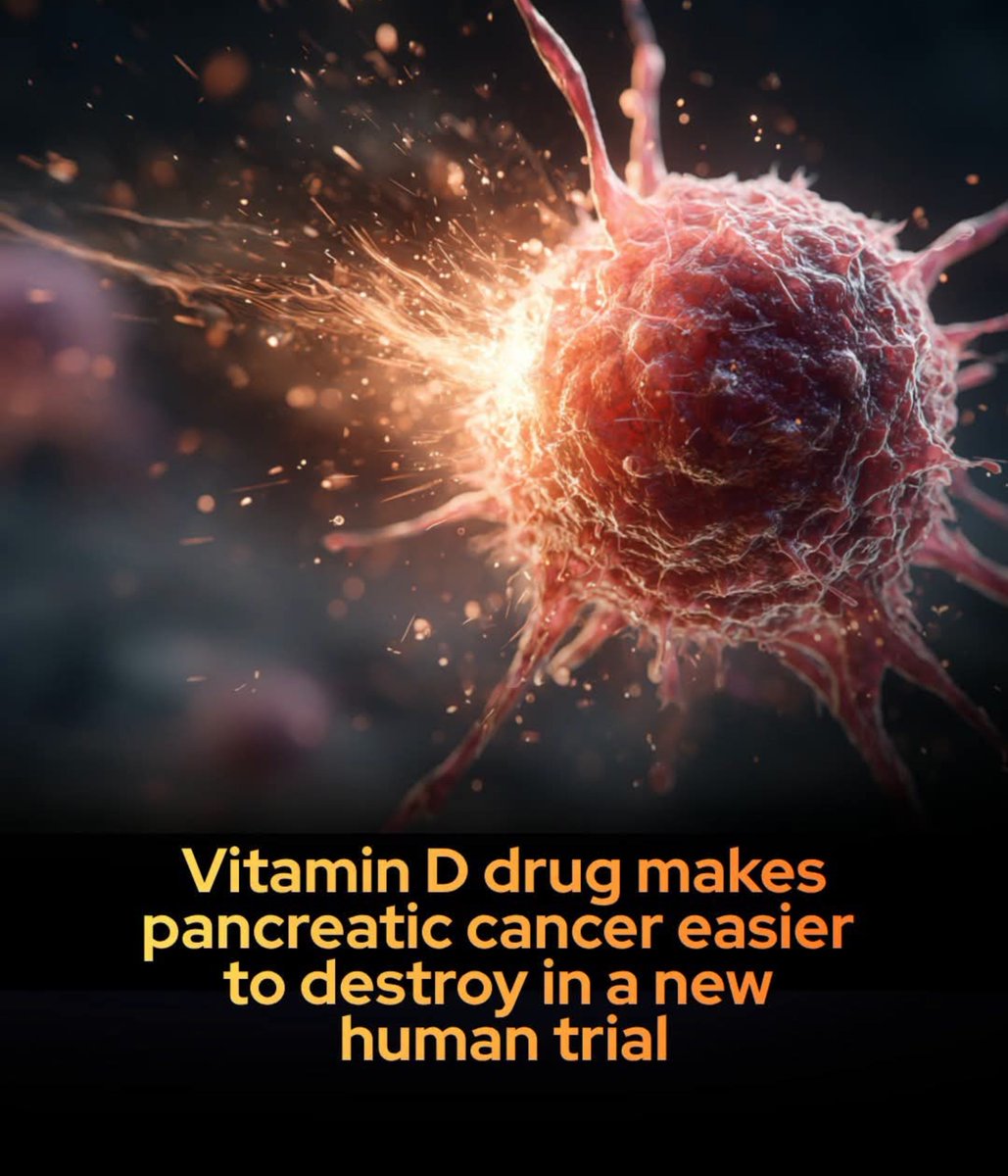
🚨 A VITAMIN D-BASED DRUG MAY HELP BREAK PANCREATIC CANCER’S HIDDEN DEFENSE — AND THE RESULTS ARE RAISING HOPES Pancreatic cancer is among the deadliest forms of cancer, partly because tumors can surround themselves with a thick layer of supportive tissue. This barrier, made largely of cells called fibroblasts, creates a hostile environment that can keep cancer-fighting immune cells out and make treatment more difficult. But scientists may have found a way to weaken this defense. In a clinical trial, researchers tested paricalcitol, a drug related to vitamin D, alongside standard chemotherapy. The drug is already approved for certain complications of chronic kidney disease. Instead of attacking cancer cells directly, it was designed to change the environment surrounding the tumor — potentially turning the cancer’s own protective territory into a place where treatment could work more effectively. The early results were striking. Among 24 patients with previously untreated metastatic pancreatic cancer who received paricalcitol alongside chemotherapy, 10 experienced partial tumor shrinkage. In the comparison group, which included 12 patients receiving chemotherapy without paricalcitol, only one experienced a partial response. But the most intriguing finding may have been what happened inside the tumors. The treatment appeared to reduce the activity of cancer-associated fibroblasts, helping immune cells called T cells penetrate deeper into the tumor tissue. In other words, researchers weren't simply trying to attack the cancer harder — they were trying to dismantle the defenses that help it survive. There was, however, an important caution. Some patients developed elevated calcium levels, requiring adjustments to their treatment. And because this was an early-phase trial involving just 36 patients, the findings do not yet prove that paricalcitol helps people live longer. Still, the research points toward a fascinating possibility: What if the key to fighting certain cancers is not just destroying the tumor, but first removing the protection that surrounds it? For a disease as difficult to treat as pancreatic cancer, changing the battlefield itself could open a promising new direction for future therapies. Larger studies will be needed to determine whether this approach can deliver lasting benefits. Source: Perez, K. J., et al. (2026). “Gemcitabine and nab-paclitaxel with or without the VDR agonist paricalcitol for metastatic pancreatic cancer: a randomized, multiarm, run-in phase trial.” Nature Cancer.

Humanity may have passed through an extreme population bottleneck hundreds of thousands of years ago, when the number of our ancestors fell dramatically. A major genetic study estimated that between roughly 930,000 and 813,000 years ago, the ancestral human population may have declined by about 98.7%, leaving an estimated 1,280 breeding individuals. Researchers reconstructed this event by analyzing genetic variation in thousands of modern human genomes. Their model suggests the bottleneck may have lasted for about 117,000 years — an extraordinarily long period when our ancestors were dangerously few in number. The period coincided with major climatic changes during the Early-to-Middle Pleistocene transition. Longer and stronger glacial cycles, cooling temperatures and changing environments may have contributed to population decline, although the exact cause remains uncertain. Importantly, 1,280 refers to the estimated “effective population size” — the number of breeding individuals needed to explain today’s genetic diversity. It does not necessarily mean only exactly 1,280 humans physically remained alive, nor that every person today can be traced to those exact individuals. The proposed bottleneck is still debated because reconstructing populations from DNA nearly a million years later involves significant uncertainty. But if the estimate is broadly correct, our evolutionary lineage once came remarkably close to disappearing. Source: Science; Chinese Academy of Sciences; Sapienza University of Rome

🫀 WHAT IF AN OLD HEART COULD ACTUALLY BECOME YOUNGER? In a recent study, researchers transplanted hearts between young and old mice and noticed something unexpected. Older hearts placed inside younger bodies began showing molecular signs of being younger. But the reverse also happened — younger hearts placed into older bodies started showing signs of faster aging. So what was going on? It appears the heart may be influenced by the body it lives in. Scientists found changes in DNA methylation, a biological marker often used to estimate the age of cells. In other words, the transplanted heart seemed to adjust its biological age according to its new environment. Researchers also looked at records from human heart transplant patients and found evidence pointing in a similar direction. That doesn’t mean an old heart suddenly becomes physically young again. Some damage caused by years of aging may be permanent. And this research is still a preprint, so it needs to be confirmed by further studies. For years, we have often thought of aging as a one-way process. Once an organ gets old, it simply keeps getting older. This research raises a very different possibility: maybe the biological age of an organ isn’t completely fixed. Could the right environment actually slow down — or even partly reverse — some aspects of aging? Scientists don’t have that answer yet. But if future research confirms these findings, the implications could reach far beyond heart transplants. Perhaps our bodies have been influencing the aging of our organs more than we ever realized.🫀 Source: Poganik et al., “Transplanted hearts assimilate the recipient’s biological age,” bioRxiv, 2026.

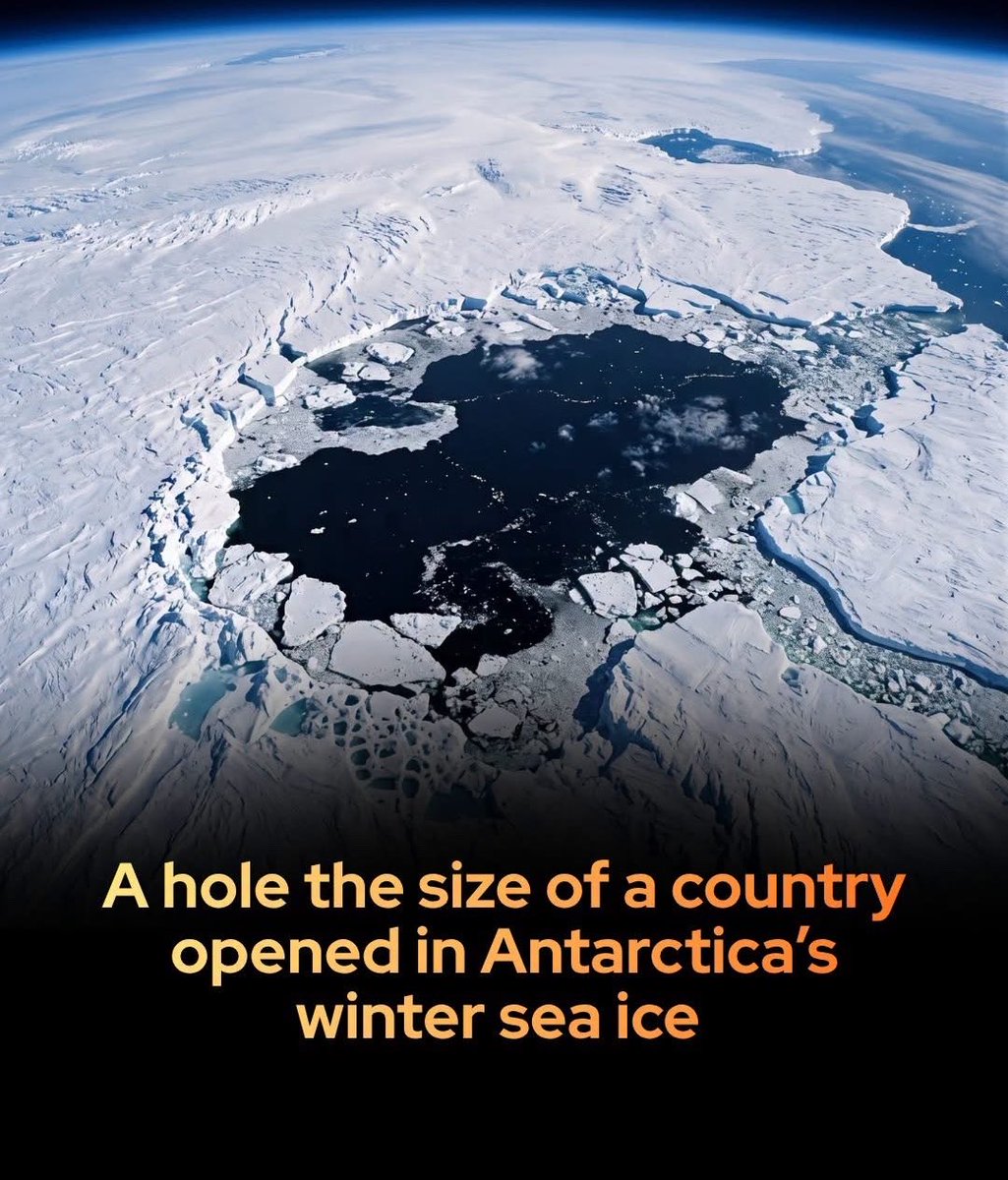
A GIANT HOLE THE SIZE OF PORTUGAL OPENED IN ANTARCTICA — AND SCIENTISTS FOUND THE HIDDEN FORCE BEHIND IT In the middle of Antarctica’s freezing winter, something deeply unusual happened. A gigantic hole suddenly appeared in the sea ice, exposing an enormous stretch of dark, open ocean where thick ice should have covered the surface. The strange opening, known as a polynya, emerged in Breid Bay, East Antarctica, in August 2024. At its largest, it reached about 34,400 square miles (89,121 square kilometers) — an area roughly comparable to Portugal. But the real mystery was not simply how large the hole became. It was how an opening this enormous could form during the Antarctic winter, when sea ice should be rapidly growing. Scientists now believe the answer came from two powerful forces working together. Between July and August, six intense atmospheric rivers swept toward the region, carrying unusually warm, moisture-filled air. These huge streams of water vapor can transport enormous amounts of heat across the atmosphere, helping warm the surface and interfere with the normal freezing process. But something even more powerful was happening beneath the ice. Strong winds pushed surface water away from the region, causing deeper water to rise toward the surface. Scientists call this process Ekman suction. The deeper ocean water was relatively warm, and once it reached the surface, it made it much harder for new sea ice to form — helping keep the enormous opening alive. And that is what makes this event so fascinating. The hole was not simply the result of warm air or warm water alone. The atmosphere and the ocean worked together to tear open a vast window in Antarctica’s winter ice. The missing ice itself does not directly cause sea levels to rise because sea ice is already floating. But its disappearance can still have major consequences. Sea ice helps protect Antarctica’s ice shelves from powerful ocean waves and provides essential habitat for tiny organisms that support the region’s food chain. Now researchers are watching closely because climate change could make the conditions behind events like this more common. If atmospheric rivers become stronger and marine heatwaves become more persistent, openings once considered extraordinary may no longer be so rare. For decades, Antarctica’s winter freeze seemed like one of the most predictable rhythms on Earth. Now, enormous holes are appearing in that frozen shield — and scientists are beginning to understand the forces opening them. Source: Swain, J. (2026). Unprecedented Open-Ocean Polynya in Breid Bay, East Antarctica in Winter 2024. Geophysical Research Letters, 53, e2026GL122580.
🚨 VOYAGER FOUND A 90,000°F “WALL” AT THE EDGE OF THE SOLAR SYSTEM Something strange is happening at the very edge of our solar system. When NASA’s Voyager 1 traveled beyond the Sun’s protective bubble, it encountered a region where temperatures can reach nearly 90,000°F (50,000°C). At first, that sounds like Voyager had reached some kind of giant wall of fire floating in space. But there is no wall. What Voyager found was a bizarre region of extremely thin, superheated plasma where the solar wind finally runs into the material surrounding our solar system. The particles flowing outward from the Sun slow down, become compressed and pile up as they encounter the pressure of interstellar space. And here is the strangest part: 90,000°F in space does not mean you would instantly burn. The plasma is so incredibly thin that there simply aren’t enough particles around to transfer much heat. In other words, something can have an astonishingly high temperature while being incapable of heating you the way a fire or oven would. Voyager’s encounter revealed just how unusual the boundary of our solar system really is. The heliosphere isn’t simply an invisible line where the Sun’s influence suddenly stops. It is a turbulent frontier where the solar wind, interstellar material and cosmic particles interact in ways scientists are still trying to understand. And this strange boundary matters to us. The enormous bubble created by the Sun stretches far beyond the planets and acts as a kind of cosmic shield, reducing the amount of some dangerous high-energy particles that can penetrate toward Earth. Voyager 1 has now traveled more than 15 billion miles from Earth, farther than any other human-made object. Long after it left the familiar planets behind, it continues drifting through an environment that no human spacecraft had ever explored before. Somewhere out there, in almost complete darkness, Voyager is crossing the frontier between the Sun and the galaxy beyond it. And what looks like a 90,000°F wall of fire is actually something far more mysterious: an invisible boundary where our solar system meets the rest of the galaxy. Source: Stone, E. C., Cummings, A. C., McDonald, F. B., Heikkila, B. C., Lal, N., & Webber, W. R., Voyager 1 Observes Low-Energy Galactic Cosmic Rays in a Region Depleted of Heliospheric Ions, Science.

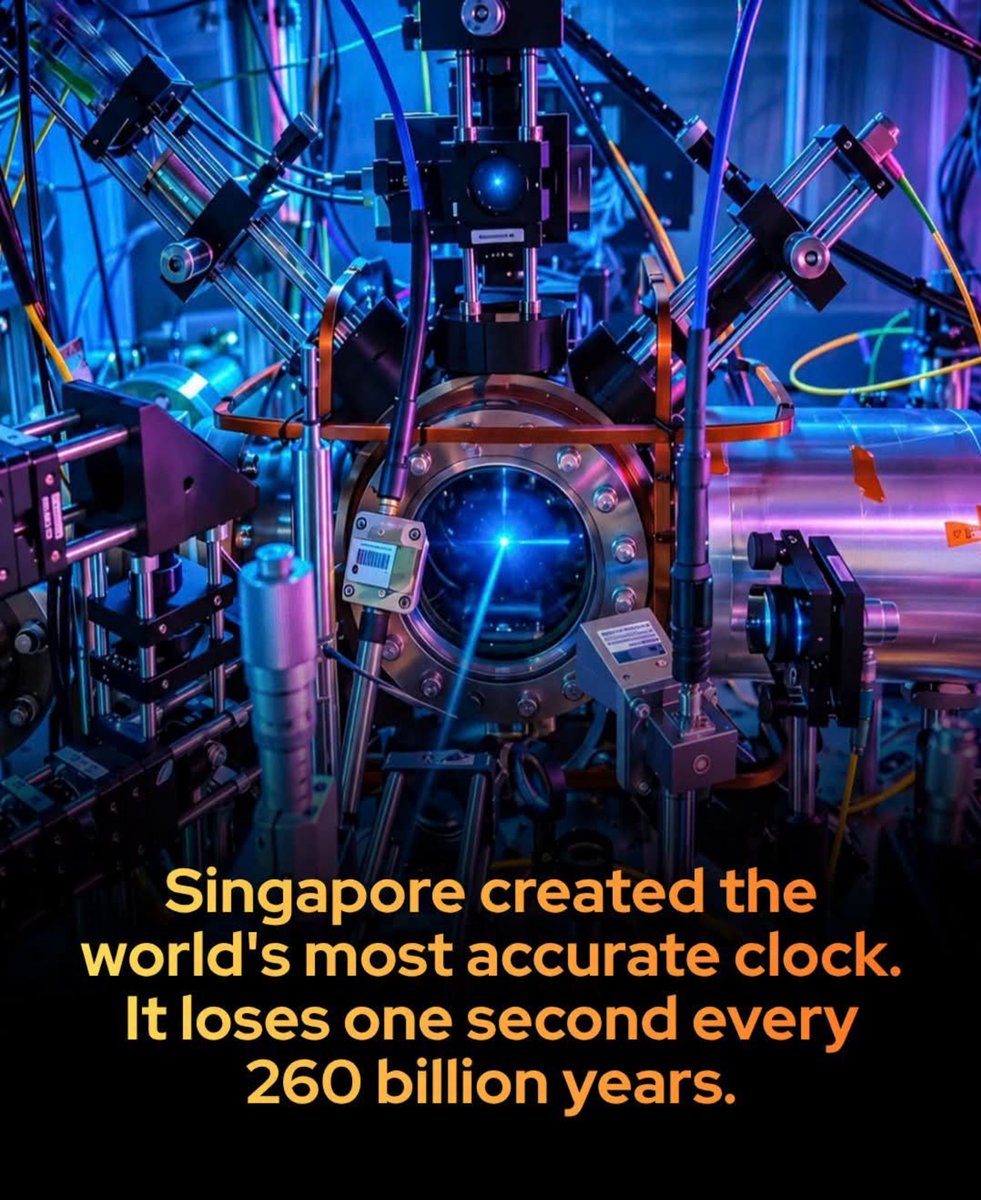
⏱️ THIS CLOCK IS SO ACCURATE, IT COULD LOSE JUST ONE SECOND IN 260 BILLION YEARS. Imagine building a clock so precise that you could start it today, wait longer than the universe has existed, and it would still be off by only about one second. That sounds impossible. But researchers at the National University of Singapore’s Centre for Quantum Technologies have just pushed atomic clocks into a new level of precision — using something incredibly small: a single ion of lutetium. The secret is hidden inside the strange quantum behavior of this rare-earth element. Lutetium is unusually resistant to changes in temperature and magnetic fields, two things that can disturb the accuracy of a clock. Even more remarkable, its excited quantum state can last for roughly a week, compared with only minutes for some other leading clock materials. But the researchers didn't simply claim that their clock was the most accurate. They built two separate lutetium clocks and ran them side by side for about 200 hours. When they compared the results, the two clocks agreed to within just 5.7 parts in 10¹⁹. That number is almost impossible to picture. It means scientists are now measuring time with such extraordinary precision that even tiny effects that were once invisible can become important. And there may be something even bigger hiding behind this achievement. The international scientific community is working toward a possible future redefinition of the second itself. The better these clocks become, the closer we get to measuring time at a level once thought unreachable. So the next time you look at the clock on your phone, remember this: humanity has now built a clock so precise that the universe itself would have to wait hundreds of billions of years to make it lose a single second. Source: Arnold, K. J., Lee, M. D. K., Zhao, Q., Qin, Q., Zhang, Z., Jayjong, N., & Barrett, M. D. (2026). Lu⁺ optical frequency references with accuracy verified at the 19th digit. Nature.
🚨 A popular joint supplement has been linked to an unexpected 25% faster progression from early memory loss to dementia. For decades, millions have relied on glucosamine for osteoarthritis symptoms. However, new research published in Nature Metabolism by neuroscientists at the University of Florida suggests this common supplement may have an alarming downside for brain health. By analyzing over a decade of electronic health records, researchers found that patients with mild cognitive impairment who regularly took glucosamine experienced a 25% higher risk of progressing to full dementia compared to non-users. Even more concerning, among those already diagnosed with Alzheimer's or related dementias, regular glucosamine use was linked to a 25% increase in mortality risk. To understand the science behind this connection, the research team conducted laboratory experiments and analyzed postmortem human brain tissue. They discovered that glucosamine, which easily crosses the blood-brain barrier, hyperactivates a biological process known as 'sugar-tagging' or hyperglycosylation. This pathway is already overactive in Alzheimer's-affected brains, and the extra sugar-tagging from the supplement appears to accelerate protein damage and memory decline. While these observational findings do not definitively prove that glucosamine causes cognitive decline, experts warn that individuals with existing memory issues should consult their healthcare providers before starting or continuing the supplement. source: Hawkinson, T. R., Liu, Z., Guo, Y., Bian, J., Gentry, M. S., & Sun, R. (2026). Hyperglycosylation is a metabolic driver of Alzheimer's disease. Nature Metabolism.

☀️ THIS PAINT CAN COOL A BUILDING BY 77°F — WITHOUT USING ELECTRICITY Researchers in China have developed an advanced radiative cooling paint that can lower exposed surface temperatures by up to 25°C (77°F) under strong sunlight. Unlike ordinary paint, which simply covers a surface, this ultra-thin coating is designed to send heat away from the surface and ultimately out toward space. The material reflects about 97% of incoming sunlight, preventing most solar energy from being absorbed in the first place. The small amount of heat that does get absorbed is then released as infrared radiation through a part of the atmosphere known as the 8–13 micrometre atmospheric window, where thermal energy can escape directly into space. The result is remarkable: tests found that the coating could reduce the temperature of the coated surface by up to 25°C, while lowering the temperature inside a structure by around 7°C — all without electricity, batteries, or chemical refrigerants. Even more interesting is how thin it is. Inspired by the microscopic structure of wrinkled human skin, the coating can achieve its cooling effect at a thickness of only about 100 micrometres, roughly five times thinner than earlier radiative-cooling coatings. The technology has already faced a real-world test. During a six-month trial at a petrochemical facility on Hainan Island, the coating was used on large liquefied-gas tanks. It helped replace water-based sprinkler cooling systems that could consume around 35 tonnes of water every day for a single tank. If production reaches the reported 600,000 tonnes per year, this could become much more than an interesting laboratory invention. Buildings, industrial facilities, storage tanks and other structures exposed to intense sunlight could potentially stay cooler simply by wearing a special layer of paint. A material that looks like ordinary paint but sends heat toward space could become a surprisingly powerful tool in a hotter world. Source: South China Morning Post (2026), “Chinese paint cuts wall temperature by 25 degrees Celsius in summer test: report.”

🌍 EARTH WON’T WAIT 5 BILLION YEARS TO BECOME UNINHABITABLE There’s a strange detail about Earth’s future that often gets overlooked. We’re told the Sun has about 5 billion years left before it runs out of hydrogen, expands into a red giant, and potentially swallows Earth. Five billion years sounds like an almost unimaginable amount of time. But Earth’s real deadline comes much sooner. The Sun is slowly getting brighter as it ages. Its energy output increases by roughly 10% every billion years. That gradual change is enough to completely reshape our planet over geological time. In roughly 1 billion years, Earth could become too hot to remain a comfortable home for life. Rising temperatures would drive major changes in the oceans and atmosphere, with water gradually being lost to space. The planet could eventually cross a point where the conditions that allowed life to flourish for billions of years can no longer be maintained. And this happens billions of years before the Sun becomes a red giant. That means Earth’s story may end as a living world long before it ends as a planet. The oceans could disappear. The atmosphere could change dramatically. Forests, animals, and eventually almost all familiar forms of life would vanish. Yet Earth itself would continue circling the Sun—a silent, barren world carrying the remains of a civilization that disappeared billions of years earlier. Then, much later, the Sun would enter its red giant phase. By that point, Earth may be engulfed or reduced to an intensely scorched world. Mars could even become temporarily warmer as the expanding Sun pushes its habitable region farther outward. So the famous 5-billion-year countdown isn’t really the countdown for life on Earth. The more important number is closer to 1 billion years. And that makes Earth’s future strangely unsettling: the planet may survive for billions of years after it has already lost the one thing that makes it special—life. Sources: NASA; ESA; scientific research on solar evolution and Earth’s long-term habitability.

An area of the brain has been shown to act as a crucial 'master switch' for pregnancy. In a new study, researchers identified a previously unknown class of hormone-sensitive neurons in the brain that is absolutely essential for a viable pregnancy. Utilizing advanced genetic mapping in mice, the scientific team found that a specific group of brain cells, known as POA Npy2r neurons, undergoes massive molecular transformations during pregnancy. When these unique neurons were targeted and deactivated, the uterus failed to implant embryos, entirely halting the progression of gestation. This major finding highlights an active, direct brain-body pathway required to sustain early pregnancy. This neurobiological breakthrough offers a compelling new angle on a long-standing medical mystery: the cause of early pregnancy and IVF failures. Approximately 15% of human pregnancies end in spontaneous loss, with many cases remaining completely unexplained. Because these critical neurons have also been identified in the human brain, researchers hope this newly discovered pathway will inspire novel diagnostic tools and therapeutic interventions, shifting the focus of reproductive medicine from the womb to the complex neural networks that govern it. source: Tanaka, S., Knoedler, J. R., Carvalho, V. M. A., Alvarado, M., Wei, Y., Yang, R., Tantry, A., Pilapitiya, S. A. E., Parasar, B., Wang, M., Davis, C. O., Cui, L., Foecke, M. H., Laird, D. J., Tan, L., & Shah, N. M. (2026). A brain locus for viable gestation. bioRxiv.

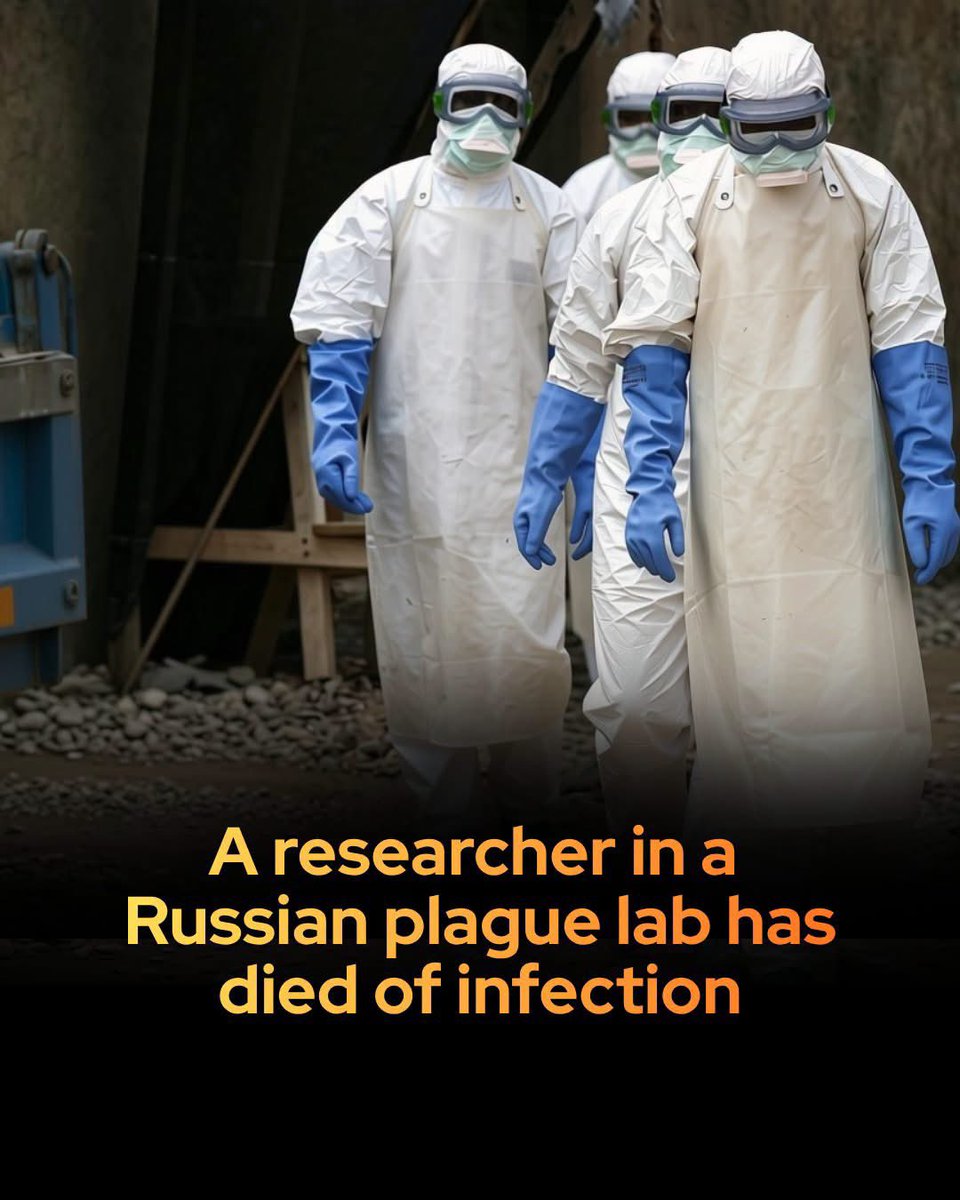
BREAKING: Reports of a plague outbreak in Russia are now circulating. A researcher in Russia died after breaking a test tube containing live plague bacteria. In response, Russian authorities placed nearly 200 people under medical quarantine. “The situation in Shelekhov, Irkutsk region, where a plague quarantine has been declared, resembles the Wuhan case,” the Russian political insider channel Nezygar warned. So far, however, officials say none of the identified contacts has shown symptoms, and their test results have come back negative. Darya Shipilova, a 28-year-old technician at the Irkutsk Anti-Plague Institute, reportedly passed away on October 1, 2026, just days after accidentally breaking a test tube containing live Yersinia pestis bacteria. She was hospitalized with severe pneumonia-like symptoms and placed on a ventilator, but succumbed to the infection. Although official government statements initially referred to the incident as an unknown, particularly dangerous infection, regional leaders later confirmed the cause was the plague. Because pneumonic plague is highly contagious via respiratory droplets and can be fatal if left untreated, the incident has triggered widespread concern over laboratory safety. However, health experts emphasize that the disease is highly treatable with common antibiotics when diagnosed early. All monitored contacts are currently symptom-free, and local officials are urging calm as a criminal investigation into potential safety violations is underway. source: Mother Jones. (2026, October 4). Reports of a plague outbreak in Russia follow the death of a researcher. Mother Jones.

Prof Peter Hotez MD P... @PeterHotez
403K Followers 8K Following Texas Medical Center (TMC) Professor-Vaccine Scientist-Author; Member, Philosophical Society of Texas and TAMEST; Dallas Morning News Texan of the Year 2022
donuts @themario0nette
0 Followers 6 Following
Sliding Bike @SlidingBike
2 Followers 52 Following Riding analogue FAT tyre mountain bikes and spinning vinyl records.
mangon @wavcst
3 Followers 360 Following
Doaa Haddad @DoaaHaddad13846
3 Followers 18 Following
Ibrostarg @ibro69
2K Followers 6K Following Doctor. | Public & preventive health | Geopolitics & socioeconomics | Faith,Science, culture & society | Tech, ancestry & lifestyle. Views Personal | Facts
عزه بنت ثوا�... @azzaalrashidi
9K Followers 3K Following رحالة أول سعودية تقطع الربع الخالي بالرحلة العالمية ركايب الأولى لقطع واستكشاف الربع الخالي/مدربة غوص وسباحة، مرشدة سياحية، باحثة في الآثار القديمة مسار عمارة.
NewLife244 @montlife999
766 Followers 5K Following Writer, Journalist, Crypto Investor, Real Estate.* If you believe Everything is possible. We will jump together Don't forget to click like and follow me.


David Lawrence | Auth... @dave_uncensored
813 Followers 735 Following Asking the hard questions about AI, tech & society. Author of AI: Friend or Foe? — cutting through hype and fear. Fiction + nonfiction.
un tal Gerardo @gerardo51186645
296 Followers 2K Following sarcástico, abusador de humor negro, exagerado.
V1 @NezAlister
219 Followers 3K Following Soy luz, alimento mis sueños e ilusiones con mi corazón, sentimiento y pensamientos, amo la vida, mis estrellas y a las personas lindas por dentro
KATSUHIRO @KATSUHIROl5
35 Followers 370 Following
CtrlAltDelMyLife @irony_in_DOLBY
665 Followers 955 Following
Siva_yadav @Siva14384227
4 Followers 82 Following
Papa Loco @PapaLocoCremer
27 Followers 400 Following
Aya Elsayed @AyaElsayedE
0 Followers 31 Following
半導体 @yakusokunositu
0 Followers 32 Following
Amani's Family @AmanisFamivqak
31 Followers 345 Following I’m Amani, a mother in Gaza. My children are injured and starving, and we live in a torn tent. Please help us survive. 💔🙏
👑Rumana @Rumanita222
4 Followers 30 Following
San @SanYangrgpi
5 Followers 120 Following
Marc Yves @marcladoxa
22K Followers 24K Following Etudiant en Sciences Po. Comptable de profession. Impartial observateur de la scène politique internationale. 🌳An aggregation of the best pictures on twitter.
Ava_Ava @AvaAva118
3 Followers 62 Following
chiekoseth @chieseth0628
10 Followers 174 Following 全く無知状態から、1年4ヶ月手探りでAIの思考深度を測る。GPT、Claude、Gemini、Grokで“実装とは違う層”を語り合う日々。
BAWS VANDONGEN @BawsVandongen
0 Followers 1K Following
Chris🫶 @iamchriz_18
122 Followers 938 Following I'm a software engineer. “As you think, so you live.”

Matthew @Matthewsuresh34
8 Followers 150 Following He who has a why to live for can bear almost anyhow
Pedro Rodrigues @Pedrooribrod
0 Followers 166 Following
Sinan Gönültaş @SinanGnlts
7 Followers 79 Following
JC @Jc03249228Jc
94 Followers 2K Following
Let's Go @CurlyCurlsHazel
14 Followers 108 Following Disabled Americans of America/Homeless Vets, Circle of Change Dog Training for Vets, Activities Board for Homeless Vets, Teacher, Avid Entrepreneur, Real Estate
Schäffredakteur @schaeffredakteu
320 Followers 1K Following Albert Einstein: Zwei Dinge sind unendlich, das Universum und die menschliche Dummheit, aber bei dem Universum bin ich mir noch nicht sicher.
Graham Oates @GrahamOatetcmh
39 Followers 131 Following
K @Kviswho
104 Followers 5K Following
大富 @dafu888888
6 Followers 105 Following
Pete colla @MyInfo06513280
4 Followers 16 Following

मानव की �... @KeshavGaurav99
444 Followers 2K Following “मानव को समझना, समाज को बेहतर बनाना और भविष्य को संवारना—यही सोच है। 🌍”
EL @ElanyaMorr48882
26 Followers 729 Following
Brian Harrod @GetTheDailyDirt
103K Followers 99K Following THE HARROD REPORT: Comprehensive up-to-date news coverage, aggregated from sources all over the world by The https://t.co/BJQ2VKnVYP news network

Augustin Bamouni @BAMOUNIAugusti2
69 Followers 1K Following
tony @wit_charle38627
2 Followers 109 Following
Vincent2112 @Vincent2112_
91 Followers 62 Following “In a world where I feel so small, I can’t stop thinking BIG” ❤️ Philippines 🇵🇭 Open Minded 🧠 EXPLORER 🌏 Question Everything “Avoid Boring People”❤️Books

666HEX313 @BigCatch313
52 Followers 280 Following Get ur head on straight… $HEX is King, not Christ and definitely not $BTC
Ekaterina Netchitailo... @Chitailova
5K Followers 4K Following PhD in philosophy. Writer working on a memoir and dystopian novel. Lecturer. Lived in Russia, Belgium, the UK and the Netherlands. Living with bipolar disorder.
Kelly Hance @KellyHance60
1K Followers 927 Following Trump & Musk supporter. “Reduce intellectual and emotional noise until you arrive at the silence of yourself and listen to it.”
Brenda (Peanci) Helto... @BrendaDHel6581
4K Followers 372 Following Christian; mom of 2; write poetry & songs; love animals; life is worth living with Jesus in it! It’s not about me; you’re important; 🚫DM
Wonder of Science @wonderofscience
2.5M Followers 42 Following "The most beautiful thing we can experience is the mysterious. It is the source of all true art and science." - Albert Einstein
Steve Stewart-William... @SteveStuWill
270K Followers 226 Following Author of "A Billion Years of Sex Differences" (2026), "The Ape That Understood the Universe" (2018), and "Darwin, God and the Meaning of Life" (2010).
Prof Peter Hotez MD P... @PeterHotez
403K Followers 8K Following Texas Medical Center (TMC) Professor-Vaccine Scientist-Author; Member, Philosophical Society of Texas and TAMEST; Dallas Morning News Texan of the Year 2022
ken o’connor 🐭 @kenoconnor18
4K Followers 3K Following Advocating Free Speech, Freedom of Choice,Democracy under Common Law Australia ( Magna Carta 1297, UK Bill of Rights 1689) On GAB, GETTR,TELEGRAM, TRUTH SOCIAL
OhioPatriot @OhioPatriotme
2K Followers 186 Following
Jon C. Munson II @JonCMunsonII
932 Followers 187 Following Artist, programmer, fascinated by ancient tech, getting back into model rocketry, sometimes D&D player... Eclectic!
Super Woke News @SuperWokeNews2
5K Followers 7K Following ProSe before the US Supreme Court - TVPRA - politics, USAF, medicine, law, Con Law, ran for office, Rumble,SPACES, Substack,daily radio show MAGA MAHA 🇺🇸
Franky @Marduck24
5K Followers 5K Following Antipopulista. Soy del 56% (del 75% en Cba). Política y perritos perdidos. Critico lo que me parece mal. Ex porteño, nacionalizado Cordobés. Vélez campeón.

Tom Young @tyoung444
944 Followers 602 Following Lover of Jesus, family, country,friends and the outdoors!
Bart Meltzer 🇺🇸... @BartMan09
654 Followers 335 Following USN (Ret) Aviation Electrician's Mate/Flight Engineer/A&P/ATP/CFI/MEI Gold Seal. I'm Atheist so if you're offended piss off. I stand with Palestine 🇵🇸
The Fake McCoy @jimmyscottkeen
1K Followers 2K Following Can/Am Energy Independence 🍁 #honkhonk #unvaccinated #wearecharliekirk
ChrisCare Stewardship... @chrissycleaning
781 Followers 3K Following We Love Each Other.. that is the Real Truth

Kerry Newnham @SquashedSiren
1K Followers 1K Following Tube-fed, bedbound, a very severe M.E veteran, injured in this battle. Unlikely to come through intact or alive. UK harmed pwME & then neglected us. LW-green
Flick McKee @yticilefnosliw
731 Followers 5K Following

✨Melinda G.✨ @5678Melinda
748 Followers 864 Following A curious soul who loves to research, read & learn with a deep appreciation of edu.; visual, culinary & performing arts; sports, music, animals & nature.
dire wolf @ADDiane
29K Followers 2K Following five pounds of crazy in a two pound bag https://t.co/tvbIjt1kXf

LindaY @lyanc237
3K Followers 4K Following Married,mother,grandmother,retired,likes beaches ,flamingos,reading,traveling,pets,gardens,art,music,humor, No porn, No DM’s !!!
🇺🇸Half Past Mid... @MoviesDoe
21K Followers 18K Following 🛑NO DM🛑 "NO DRAMA ZONE"-ART-Flowers-Nature-Cats-Pets-Positive🕊Christian✝ Veteran God/Family/Country -Everything with my tag is my creation-Do NOT reuse it!-
Yanelis @Yanelis5vix
515 Followers 37 Following “Calm mind. Strong discipline. Big dreams.”.. Orgullosamente cubana. Right-wing. Pro-freedom. Pro-America. 🇺🇸
Brittany Vibez @BrittanyVibez33
2K Followers 2K Following Artist | Author | Sister | Friend | Poet | Student | Teacher | Visionary | Freelancer | Researcher | #Creator
Freya Dagr 🧚444 @Lady_Vanaheim
2K Followers 958 Following ᚦᛖ•ᛚᚨᛞᛃ 🌟 Mystic Medium • Divine Light Channel • Intuitive Soul Guide 🌟 Alchemy is my Art ~ Frequency is the Game ~ Realms are a Playground
Bonnie R @duke_devil
397 Followers 515 Following Conservative cat mom. Please adopt - don’t shop for pets!
Volkov 🦅 @modern_herdsman
286 Followers 276 Following 💫The Creator Commands All.. 🦅Ancient Birds.. 🐜Ants.. 🌔Space.. 🐾Nature.. ✈️Retired Pilot.. 🌍Ancient African.. 🪄Ancient Beliefs Shape Religious Thought.
PurΞLovΞ ❤ @RealPureLove
5K Followers 5K Following In case you haven't heard it today, I love you. ❤️ Anti-Global fascism. I don't hit first, but I do hit back. Take care of each other.❤️

Alessandro Peruzzi @AlessandroP51
193 Followers 644 Following
Mike Costantini @madelmo419
4K Followers 4K Following
TruthSleuth @missinginfo777
260 Followers 1K Following I post missing information-“Only the small secrets need to be protected. The large ones are protected by the public’s incredulity” MM

M Gibson @mgib81
2K Followers 3K Following Saved by grace. Our dog Lacey is boss! 3 time voter for 3 time President Trump. Cut my teeth on Reagan and Rush!
LISA SOLANA-CARTER @DENTALSOLUTION
71 Followers 125 Following I own a Temporary & Permanent Placement Service for Dental Professionals

Steve Cochrane @athletewhisper
573 Followers 2K Following

Lou Martin @lightheart2012
2K Followers 6K Following After a spiritual awakening in meditation at 30, I began to work with Spirit Guides, I have taught with Spirit's love and guidance through U.S. Canada & Europe.
FAKEY FAKEY ✟ @4winds_
14K Followers 13K Following All the world’s a stage. Exposing FAKE news, science, history & health. REAL agendas. Videos + receipts.


Ian Jackson 🩸 @pip_reaper
5K Followers 5K Following #LCHF I AM That I AM. Don't Trust, verify. Question Everything, Follow the money, do your own research, and join the dots. No DMs Please.
Catronwalk @catalewalk
650 Followers 1K Following
Trent S @SnorkyMN
929 Followers 1K Following For old-school online gaming text based D&D Fun, check out https://t.co/KQzhICS6ni.
Ryan morton CITIZEN J... @Ryanmor54929339
909 Followers 594 Following In the business of finding FREE SPEECH
John Chamberlain, MHA... @misterchambo
20K Followers 17K Following Retired Hospital and Physician Practice CEO, https://t.co/sCQR6hlC2O and Lifelong Razorback Fan🐗
MACK ULTRA_5x5 @MACKULTRA_0k
2K Followers 2K Following ULTRA MAGA 🇺🇸 1A 2A 🩸🐸 🚫 NWO 🚫 UN 🚫 WHO 🚫 WEF #TRUMP2024 #DRAINTHESWAMP JESUS IS KING 🙏🏻✝️ ❌ NO DM unless we know each other
Dale @Dale68thAHC
2K Followers 2K Following Sapulpa High School in 1967. Graduated Oklahoma State University in 1969. Served with 68 AHC in 1970. Retired Aircraft Mechanic. Not into DM's, sorry!
Gina @GinaBobina66
3K Followers 3K Following
Jen @Jen83182816407
352 Followers 219 Following
God bless DONALD J. T... @joebinkir
495 Followers 3K Following God bless the United States 🇺🇸♥️📖trump won the 2020 election. we all know it. the world knows it
You might like